
What is the effect of global warming now?
 On the surface it certainly can appear that way. But just because
some of us are suffering through a particularly cold and snowy winter
doesn’t refute the fact that the globe is warming as we continue to
pump carbon dioxide and other greenhouse gases into the atmosphere.
On the surface it certainly can appear that way. But just because
some of us are suffering through a particularly cold and snowy winter
doesn’t refute the fact that the globe is warming as we continue to
pump carbon dioxide and other greenhouse gases into the atmosphere.
According to the National Aeronautics and Space Administration (NASA), the 10 warmest years on record have occurred since 1997. And the National Atmospheric and Oceanographic Administration (NOAA) reports that recent decades have been the warmest since at least around 1000 AD, and that the warming we’ve seen since the late 19th century is unprecedented over the last 1,000 years.
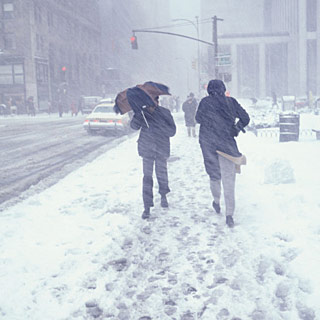
Most scientists agree that we need to differentiate between weather and climate. The NOAA defines climate as the average of weather over at least a 30-year period. So periodic aberrations—like the harsh winter storms ravaging the Southeast and other parts of the country this winter—do not call the science of human-induced global warming into question.
Even most global warming skeptics agree that a specific cold snap or freak storm doesn’t have any bearing on whether or not the climate problem is real. One such skeptic, Jimmy Hogan of the Rational Environmentalist website writes, “If we are throwing out anecdotal evidence that refutes global warming we must at the same time throw out anecdotal evidence that supports it.” He cites environmental groups holding up Hurricane Katrina as proof of global warming as one example of the latter.
If nothing else, we should all keep in mind that every time we turn up the thermostat this winter to combat the cold, we are contributing to global warming by consuming more fossil fuel power. Until we can shift our economy over to greener energy sources, global warming will be a problem, regardless of how warm or cold it is outside.

